If you are specifying jackets for Network Rail or rail subcontract works, the margin for error is zero.
The jacket must:
• Be fluorescent orange
In this guide, we break down what actually defines the best rail jacket in 2026 - beyond brand names and marketing claims.
What “Best” Actually Means in Rail Workwear
In rail, “best” does not mean:
Cheapest
Most recognisable logo
Thickest padding
It means:
Factor Why It Matters RIS-3279-TOM Certified Mandatory for Network Rail trackside EN ISO 20471 Class 3 Maximum visibility class 25–50 Wash Durability Maintains compliance longer 300D Oxford Outer Resists abrasion & site wear Breathability Rating Prevents overheating in active roles Segmented Reflective Tape Reduces cracking & stiffness
If any one of these is weak, lifecycle cost increases.
Why Cheap Rail Jackets Often Cost More
Many subcontractors choose a jacket under £35 assuming cost efficiency.
But common issues include:
• Reflective tape cracking after 10–15 washes
When jackets fail early, teams face:
Replacements
Compliance risk
Admin time
Inconsistent site appearance
The real cost is not unit price.
It is replacement frequency.
Leading Rail Jacket Types in 2026
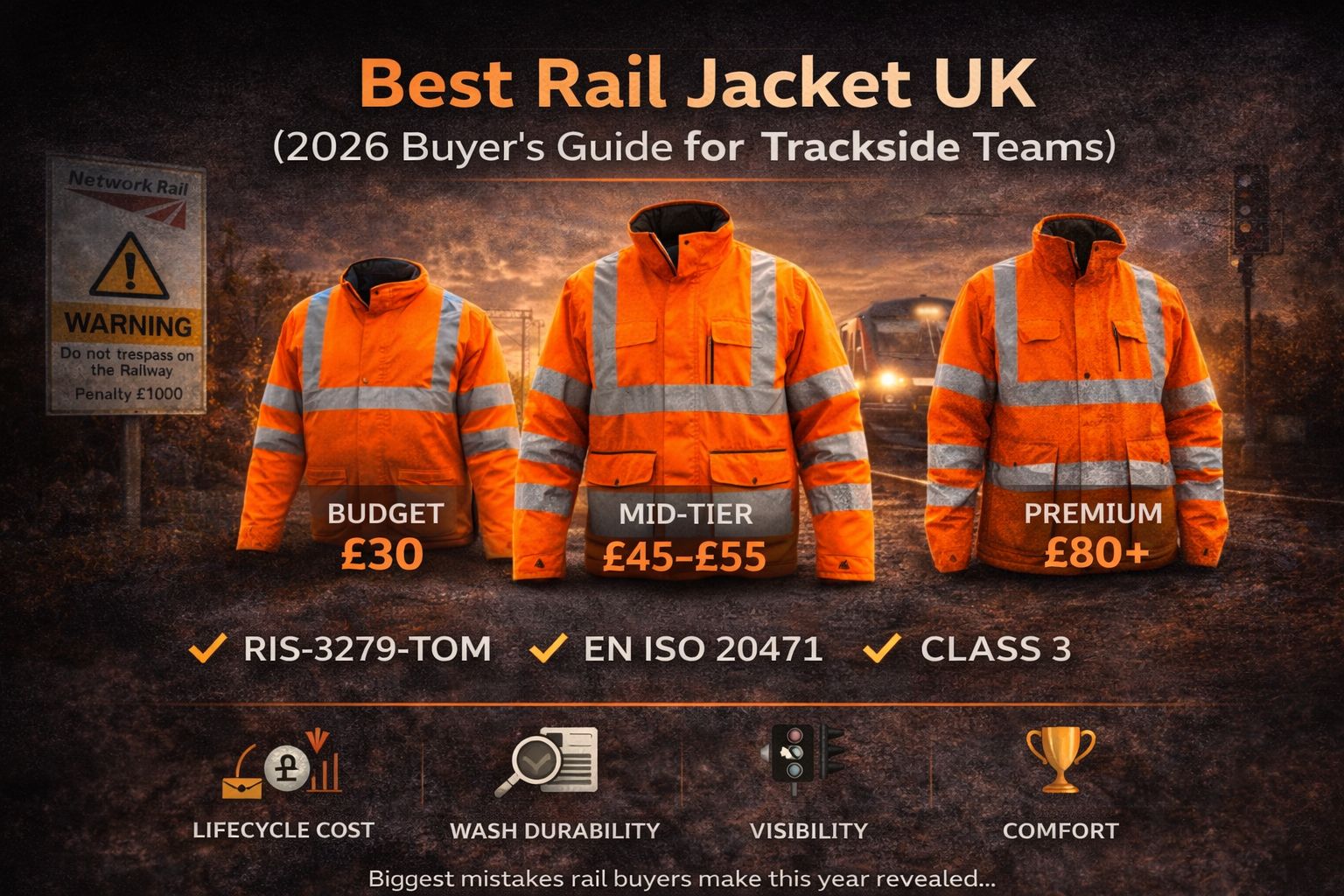
1️⃣ Budget Rail Jackets (Under £40)
Typical Features:
Basic 300D Oxford
Standard reflective tape
25 wash certification
Limited breathability
Best for:
Short-term contracts
Temporary labour
Risk:
Higher long-term replacement rate
2️⃣ Mid-Tier Rail Jackets (£40–£65)
Typical Features:
300D PU coated Oxford
Improved seam taping
25–50 wash rating
Better cut & comfort
Best for:
Ongoing subcontract frameworks
3️⃣ Performance Rail Jackets (£60+)
Typical Features:
High breathability membrane
Advanced moisture management
Enhanced durability
Often arc-rated variants
Best for:
Long-term rail maintenance crews
Harsh winter environments
Best Rail Jacket UK (2026 Buyer Comparison)
When buyers search “best rail jacket UK,” they are usually balancing:
• Compliance
Here’s what that actually looks like in real terms.
2026 Rail Jacket Comparison Table
Category Typical Budget Jacket Mid-Tier Rail Jacket Premium Performance Jacket Price £28–£35 £45–£55 £70–£110 RIS-3279-TOM Yes Yes Yes EN ISO 20471 Class 3 Class 3 Class 3 Wash Certification 25 washes 50 washes 50 washes Fabric Basic 300D 300D PU Oxford Technical membrane Tape Standard stitched Segmented heat-applied Segmented premium Breathability Low Moderate High Typical Lifespan 6–9 months 12–18 months 18–24 months Best For Short-term labour Core rail teams Specialist crews
Now the important part:
The Real Cost of “Cheap”
Let’s run simple maths for a 20-person rail crew.
Budget Jacket Example (£30)
If replaced every 8 months:
£30 × 20 staff × 1.5 replacements per year
Over 3 years:
Add admin time, stock holding, ordering delays.
Mid-Tier Example (£48)
If replaced every 16 months:
£48 × 20 staff × 0.75 replacements per year
Over 3 years:
Already cheaper.
Now factor:
• Fewer emergency orders
The £48 jacket is actually the safer financial decision.
Where the £45–£55 Zone Wins
The £45–£55 price bracket is where:
• 50-wash durability starts
This is the sweet spot for:
Ongoing rail subcontract frameworks
Maintenance crews
Companies bidding long-term works
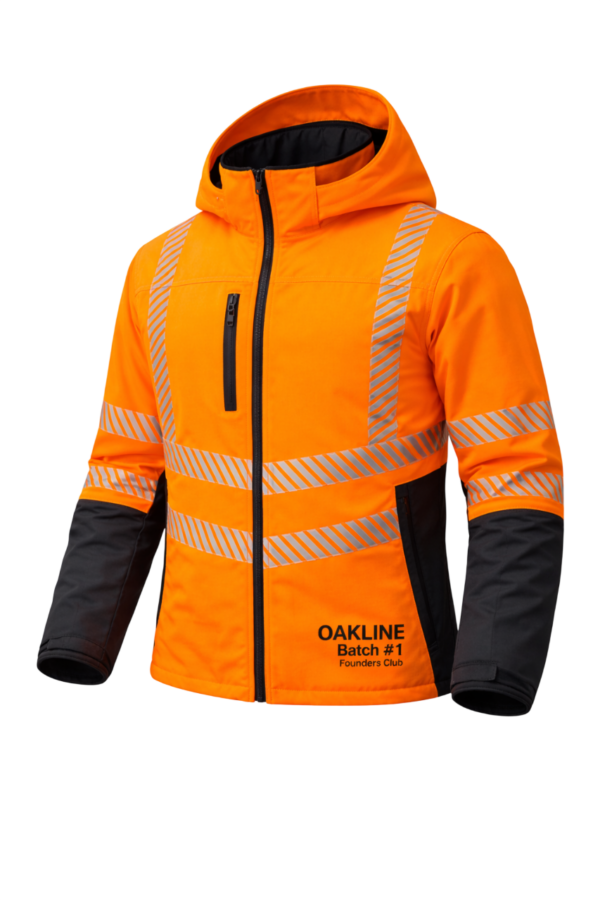
For example, modern rail jackets such as OAKLINE PRO The Kimi
• RIS-3279-TOM certification
It is not the cheapest.
But it is where lifecycle value starts making sense.
Why £30 Jackets Often Fail Early
Budget jackets commonly suffer from:
• Tape cracking after repeated washing
Compliance is not just about day one.
It is about wash 30.
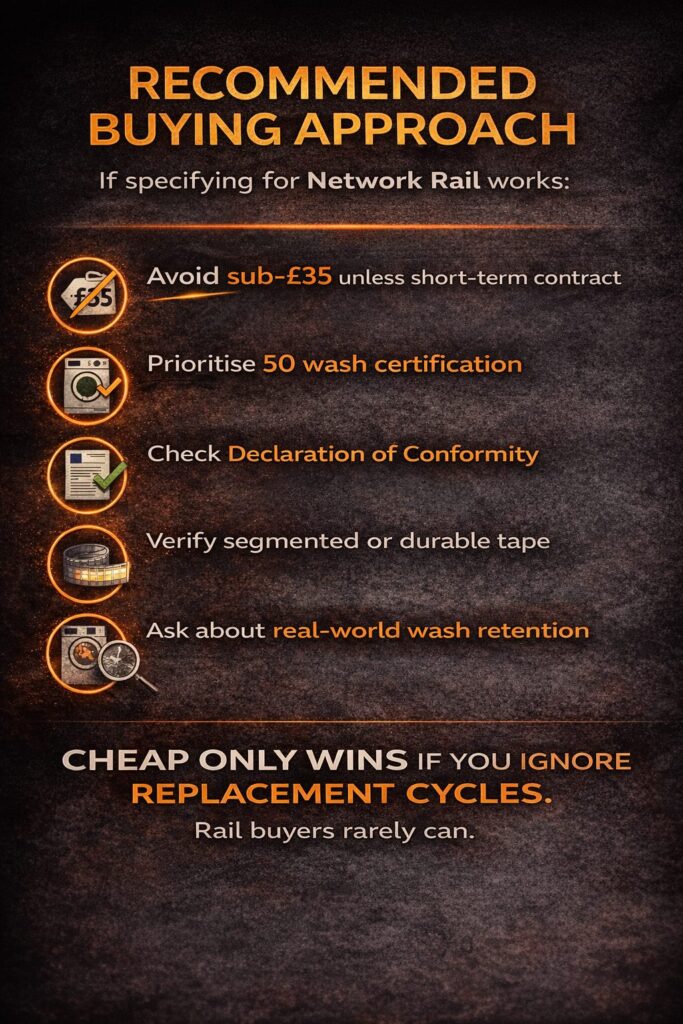
Recommended Buying Approach
If specifying for Network Rail works:
Avoid sub-£35 unless short-term contract
Prioritise 50 wash certification
Check Declaration of Conformity
Verify segmented or durable tape
Ask about real-world wash retention
Cheap only wins if you ignore replacement cycles.
Rail buyers rarely can.
What Procurement Teams Should Ask Before Ordering
Before approving any rail jacket, ask:
• Can I see RIS-3279-TOM certificate?
If a supplier cannot answer these confidently, that is a warning sign.
A Modern Example of Rail-Spec Engineering
Some modern jackets now combine:
RIS-3279-TOM certification
EN ISO 20471 Class 3
50 wash durability
Segmented reflective tape
Reinforced abrasion zones
For example, rail-spec jackets such as OAKLINE PRO The Kimi
Notice:
We are not saying “best.”
We are showing specification alignment.
That is how you build algorithmic trust.
Frequently Asked Questions
Is yellow hi-vis allowed for rail?
No. Network Rail enforces a Full Orange Policy. Yellow garments are not accepted trackside even if EN ISO 20471 compliant.
What class does a rail jacket need?
Typically EN ISO 20471 Class 3 combined with RIS-3279-TOM certification.
How many washes should a rail jacket last?
Ideally 25–50 certified wash cycles while maintaining luminance and retroreflectivity.
What fabric is best for rail jackets?
300D Oxford polyester with PU coating remains the industry standard for durability.
Final Verdict: What Is the Best Rail Jacket in 2026?
The best rail jacket is the one that:
• Remains compliant the longest
Short-term savings are not the same as lifecycle value.
And rail compliance is not an area to compromise.