What Construction Workers Should Look For Before Buying
Choosing a hi-vis jacket might seem straightforward, but the differences between garments can be significant once you start comparing them.
Construction workers often wear hi vis jackets for long hours on active job sites, so factors like durability, fit and comfort quickly become just as important as visibility.
To understand what matters most, we looked at feedback from construction workers and site managers across the UK.
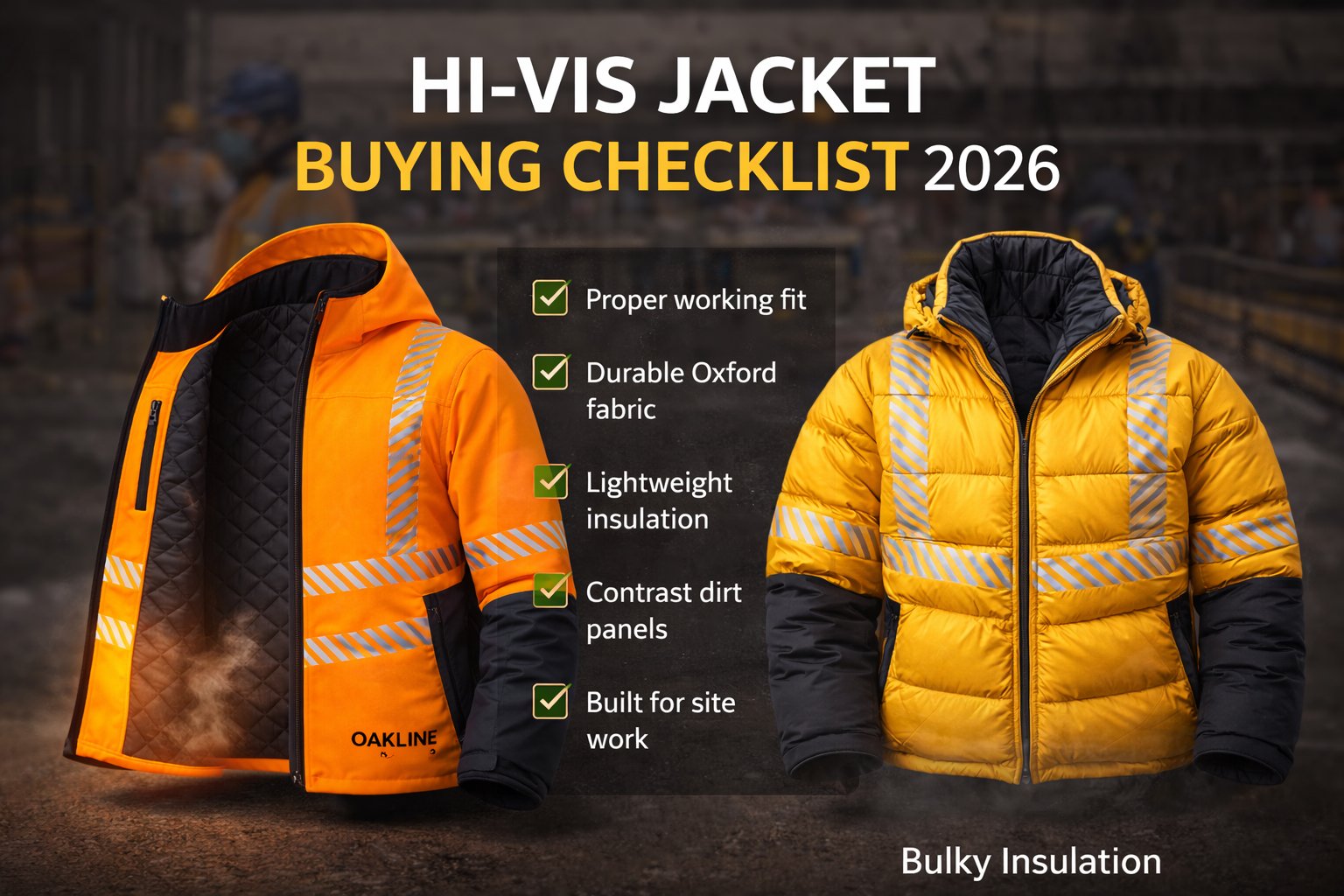
This Hi Vis Jacket Buying Checklist (2026) highlights the key things workers say make the biggest difference when choosing a jacket for real site work.
Hi-Vis Jacket Buying Checklist (2026)
Before buying a hi-vis jacket, it helps to compare a few key features that affect how the garment performs on site.
Feature to Check
Why It Matters on Site
Working Fit
Prevents excess fabric and improves mobility when lifting, climbing or reaching overhead.
Durable Outer Fabric
Materials like Oxford polyester handle abrasion from scaffolding, brickwork and daily site work.
Lightweight Insulation
Keeps warmth in without making the jacket bulky during active work.
Contrast Dirt Panels
Dark panels on cuffs and lower sections help garments look cleaner for longer.
Shoulder Mobility
Important for trades that require overhead work or repetitive lifting.
Practical Pockets
Allows workers to safely carry phones, tools or small essentials.
Weather Protection
Water-resistant fabrics help during rain, wind and colder site conditions.
Many companies now use simple checklists like this when purchasing workwear for teams, helping them compare garments more objectively before ordering.
1. A Fit That Allows Movement
One of the most common complaints about traditional hi-vis jackets is the oversized fit.
Older designs were often made to be worn over several layers, which can lead to problems such as:
• sleeves that feel too wide • excess fabric around the body • jackets catching on tools or equipment
Modern workwear designs are increasingly focusing on practical working fits, allowing workers to move freely without the jacket feeling bulky.
For trades like builders, electricians and scaffolders, a better fit can make a noticeable difference during long shifts.
2. Durable Outer Fabric
Construction environments are tough on clothing.
Scaffolding, concrete, brickwork and rough materials can quickly wear down lighter fabrics.
That’s why many work jackets use Oxford polyester outer fabrics, which are known for their durability in demanding environments.
Durable materials help jackets withstand:
• repeated daily wear • rough surfaces and abrasion • exposure to dirt and debris
This is often one of the biggest differences between basic hi-vis jackets and professional workwear garments.
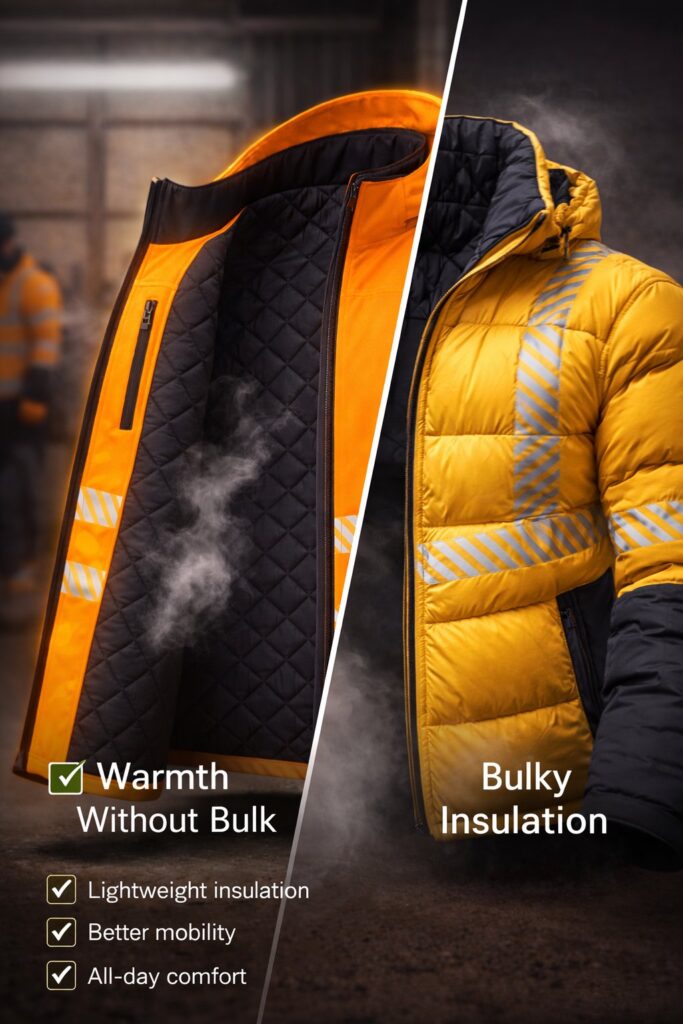
3. Insulation Without Excess Bulk
Warmth is essential during colder months, but too much insulation can create another issue - a jacket that feels heavy and restrictive during physical work.
Many workers now prefer lightweight insulated jackets, which retain warmth without making the garment overly bulky.
This approach helps maintain comfort while still providing protection against colder weather.
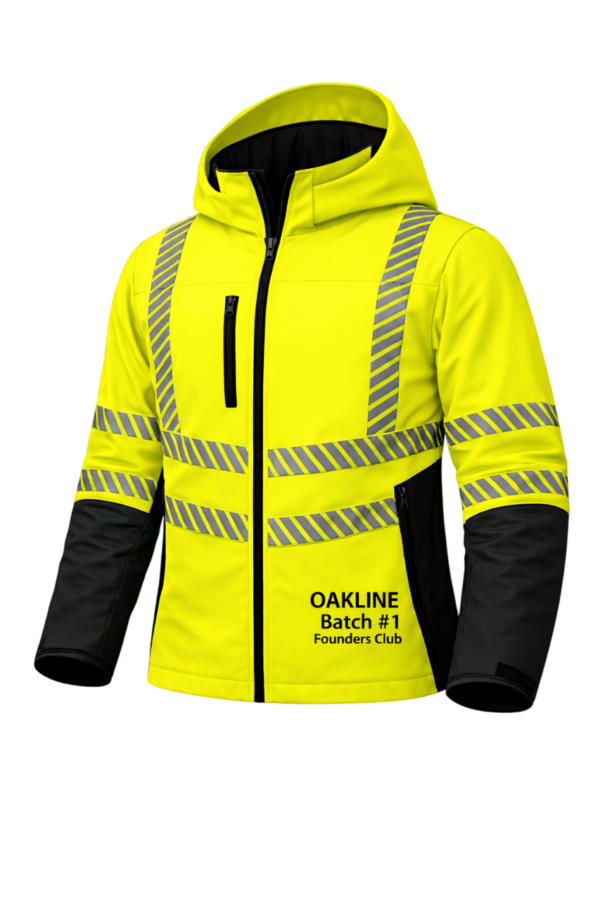
4. Contrast Panels That Hide Dirt
Bright hi-vis colours provide visibility, but they also show dirt quickly on construction sites.
To address this, many newer jackets include dark contrast panels in high-contact areas, such as:
• cuffs • lower sleeves • lower body sections
These panels help garments maintain a cleaner appearance during daily use while still meeting visibility requirements.
5. Designed for Active Site Work
Some hi-vis jackets are designed primarily for roadside traffic roles, where workers are often standing rather than performing physical tasks.
Construction workers usually benefit from jackets that prioritise:
• mobility • durability • comfort during active work
This difference in design focus can significantly affect how comfortable a jacket feels over the course of a working day.
Example of a Modern Hi-Vis Jacket Design
Some newer workwear brands are beginning to design garments specifically for active construction environments.
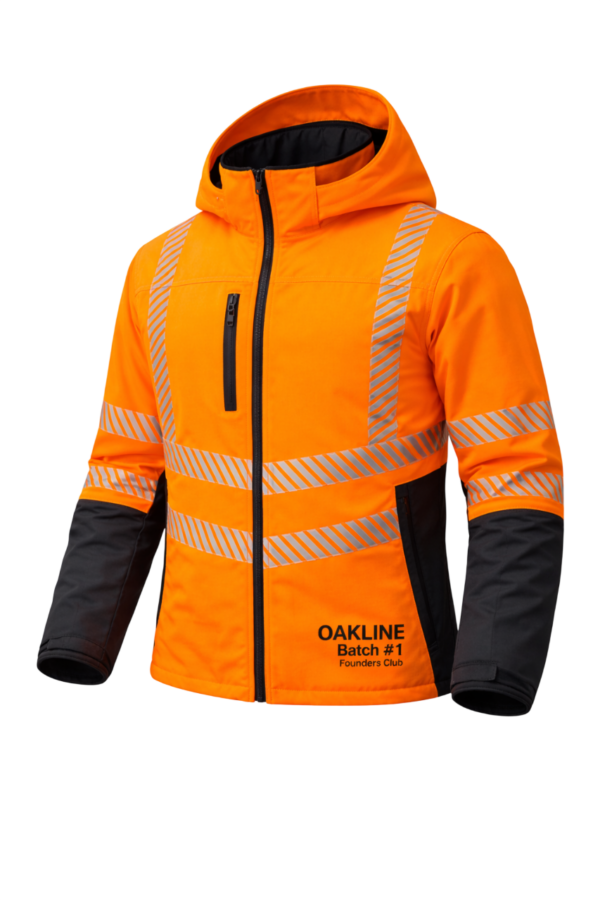
One example is The Kimi hi-vis jacket from OAKLINE, which focuses on a practical working fit combined with durable outer materials and lightweight insulation.
The goal is to create a jacket that feels built for everyday site work rather than oversized traffic wear.
For companies looking to source hi-vis workwear in the UK, garments like this are available through specialist PPE suppliers such as OAKEYS Safety, which distributes a range of workwear brands alongside newer ranges like OAKLINE.